

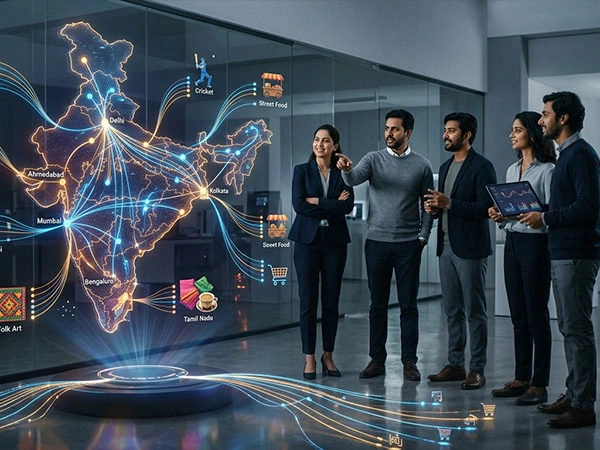
The landscape of branding is undergoing a significant transformation due to the realm of Regional Language Marketing in India. With its 22 official languages and over 100 dialects, India boasts remarkable linguistic diversity. Every 5 kilometers, you’ll encounter a new language, accompanied by shifts in culture, emotions, and communication styles.
According to IBEF, the internet user base crossed 900 million in 2025. Rural India has 488 million users, leading this surge. Hence, accounting for 55% of the total internet population. Thereby, it is making Indian regional content marketing crucial.
The audience never demands a quoted translation, but a brand that speaks their language demands localization marketing in India. According to Franchise India, vernacular-language users in India currently account for 75% of the total internet user base.
As a result, the Indian regional content market is a gold rush redefining brand engagement. In this blog, we will explain why Regional Language Marketing is important and how it helps brands.
Key Insights
- According to IAMAI reports, 57% of internet users mention that they prefer content in their regional languages. Due to this, regional language marketing is no longer optional. It is the crucial element of branding.
- An effective vernacular content strategy means localization, not just translation. But the cultural nuances that drive trust and faith.
- As per Atomcomm, regional content generates 1.5 to 2 times higher engagement rates than English-language content.
- Tier 2 and Tier 3 cities are the fastest-growing markets in India. Thereby giving momentum to the Indian regional content market.
- Brands that have cracked the regional codes are winning. They are using regional language marketing with cultural intent.
Why Regional Language Marketing in India is the Biggest Growth Opportunity?

India is not limited to one kind of market. It has 28 states, 22 official languages, and hundreds of dialects. According to adgully.com, over 622 million Indians now own a smartphone. It is the primary gateway to digital services and online content.
Reasons for Localization Marketing In India
-
Bharat Internet Boom
Affordable smartphones, cheap data (after Jio’s 2016 internet disruption), and intuitive regional-language apps are floodgates for the internet boom in India.
-
Regional Apps Penetration
Regional apps like ShareChat have 350 million active users, according to Atomcomm. 90% of the users exclusively consume content in local languages.
-
Localization Marketing in India
As per market-xcel.com, 84% of Indians find content in their regional languages more relatable and trustworthy. It is creating an unprecedented opportunity for brands to gain audience trust through an Indian regional content market strategy.
Hence, regional content marketing is cheaper, trustworthy, and easy to convert. The investment in vernacular content brings faster growth and engagement.
Localization vs. Translation – A Critical Distinction
Most of the brands stumble at the point of localization. When they hear regional language marketing, they tend to hire a translator, run the English copy through a language tool, and publish it. But it does not give the right result.
Why Google Translate Marketing Fails
Machine translation produces grammatically passable content that native readers immediately find inauthentic. More importantly, it misses the point entirely and does not bring the resonating results.
For example, a Gujarati-speaking homemaker in Surat does not want Gujarati words. But she wants references she can recognize, humor she can connect with, and cultural signals that tell her this brand is made for her.
What Real Localization Looks Like
Localization marketing in India does not mean rewriting content with word-for-word translations; it demands local idioms and expressions. Culturally relevant examples related to festivals, food habits, or local preferences tend to reshape marketing strategies.
The vernacular content is important for finance, healthcare, and real estate. When native words come from professionals in various domains, people find them trustworthy and reliable.
Vernacular Content Strategy – Platform by Platform
Regional language marketing is not a monotonous channel to play with. Different platforms attract different regional audiences, and each demands a personalized approach.
YouTube Ads and Short-form Video
YouTube is the powerful vernacular content engine in India today. According to exchange4media.com, 93% of YouTube viewers prefer watching content in Indian languages.
Besides Hindi, other major regional languages such as Bengali, Gujarati, and Punjabi are spoken.
Brands should focus on these two things:
-
Invest in Regional YouTube Creators
Investing in regional YouTube creators is the primary channel for interacting with buyers and converting them.
Sugar Cosmetics or Myglamm have proven this model by partnering with vernacular beauty creators in Hindi and regional languages. It has boosted conversion for these brands.
-
Produce Short-form Video in Regional Languages
Reels and YouTube Shorts are primarily used by people for content consumption. The videos in the native language have higher sharing velocity and conversion rates.
As per exchange4media, 47% of Indian consumers are influenced by short-form videos when making purchases.
Social Media and WhatsApp
Facebook, India, Instagram, and WhatsApp are the dominant social media platforms in India. All are revolving around the Indian regional content market. They have achieved a higher engagement rate due to regional creators.
Voice Search and Vernacular SEO
As per the reports of exchange4media, almost 65% of Indian users use voice search because of its ease of use in multilingual environments.
In vernacular content strategy, digital marketing experts have to check SEO and Google Keyword Planner queries in regional languages such as Hindi, Tamil, Telugu, Kannada, Malayalam, and Marathi.
Brands targeting local services in regional languages achieve higher organic reach.
Building a vernacular content strategy: A Step-by-Step framework
Step 1: Language Selection
Start with one or two languages that align with the core target market. Mapping of consumer data: where is the existing buyer located, and where is the growth coming from? Prioritize that. A strong brand in Bangalore should start in Kannada and then focus on other locations.
Step 2: Content Creation Workflows
The hiring of native content creators who are not translators but the real creators who know the accent and local tone. The beginning should be with a micro-influencer in the main target regions. When they convert better, cost less, and carry more credibility, then the brand should go for pan-India.
Step 3: Performance Metrics for Regional Campaigns
In regional campaigns, KPIs matter more than the tracking of impressions. Since regional campaigns have reduced competition, the cost per acquisition is lower, and the engagement rate is higher due to the language connection.
When the conversions are coming in the native language, it means the voice search traffic is working well, and localization marketing in India becomes seamless.
Why Choose UNV Digital as Your Regional Language Marketing Partner?

India’s linguistic diversity is not a challenge, but it is a competitive advantage that brands need to capitalize on. At UNV Digital, we have spent a decade building multilingual digital marketing strategies for brands.
We have worked with several brands across diverse market regions and locations. Our team of experts knows what it takes to connect with Bharat authentically at a larger scale.
Whether your brand needs a full vernacular content strategy, regional SEO, or localised performance marketing campaigns. We bring the creative depth to increase conversions and engagement.
India does not speak one language, neither should your brand. Contact us today and book a 30-minute regional strategy consultation for mapping out best practices!
FAQs
-
What is regional language marketing in India?
Regional Language Marketing encompasses the creation, promotion, comedy, and branding communications. In India, some languages considered native include Gujarati, Tamil, Telugu, Marathi, Bengali, Malayalam, and numerous others. The regional language marketing concept transcends mere translation to embrace cultural localization.
-
How is localization different from translation?
Translation refers to the process of changing words from one language to another. Localization is concerned with reconstructing the message for the specified cultural environment. It involves mentioning idioms, laws, and even true voices representing the local audience. Brands that translate achieve little, but those that localize see greater engagement and higher conversion rates.
-
Can small brands afford vernacular marketing?
Yes, the vernacular marketing campaign costs less than the English-based one because of lower cost-per-click for regional-language advertisements, more affordable micro-influencers compared to metropolis prices, and increased organic reach through community sharing.
