


The creative is live, and the budget is spent, but for most marketers, waiting for results is nerve-wracking. Will it convert? What is the expected ROI? Traditionally, these questions circumscribe the human mind until results are evident.
According to Jasper.ai, 91% of marketers report actively using AI in their work, and it is helping them to increase the ROI and engagement significantly. With the power of AI predictive analytics in marketing campaigns, the performance marketer can see the results.
As per the reports of Fortune Business Insights, the global predictive analytics market is expected to grow from USD 27.56 billion in 2026 to USD 116.65 billion by 2034. It is exhibiting a CAGR of 19.80% during the forecasted period.
In this blog, we will tell you how to use AI for campaign outcome prediction. And why campaign performance prediction has become the core pillar of marketing.
Key Insights
- According to KEO marketing, 74% of B2B marketing teams use AI predictive analytics in marketing campaigns to gain a competitive advantage. It helps performance marketers achieve 32% higher lead quality and a 27% faster sales cycle per year.
- AI predictive analytics transform strategy from reactive to proactive. It assists brands in knowing how to use AI for campaign outcome prediction. In addition, before spending a single rupee or dollar, they can forecast the optimal result.
- AI powers campaign performance forecasting, helping prevent up to 43% of campaign failures before they happen. As per the sprints and sneakers.
- AI predictive analytics in marketing campaigns start with one high-impact use case: building clean first-party data and expanding from there.
- AI does not optimize campaigns in real time; instead, it predicts performance before marketers allocate or spend the budget.
What are AI Predictive Analytics in Marketing Campaigns?
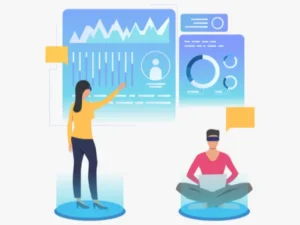
AI predictive analytics in marketing campaigns is not just a significant improvement in marketing. Hence, it is fundamentally reshaping how markets plan, execute, and measure campaigns according to the forecasting process. Predictive analysis is the best practice for predictive AI to create effectiveness testing ad campaigns.
AI Predictive Analytics Brought a 360-Degree Shift
AI predictive analytics has brought a 360-degree shift in the marketing strategies of prominent brands. They use historical data, machine learning tools, and statistical algorithms for forecasting what will happen before the company spends a rupee.
Traditional vs AI-Powered Marketing Cycle
-
Traditional Campaign
In traditional marketing, audience research and creative development are done for 2 to 4 weeks. Afterward, the initial results are optimized, and a full impact assessment is conducted to launch the new campaign. After obtaining actionable data, further steps are taken, and a full test is carried out.
-
AI-Powered Marketing
In AI-Powered marketing, audience modeling is done over 2-3 days, the creative score is obtained over 1-2 days, and performance forecasting is done over 2-3 days.
Afterward, real-time optimization and full impact assessment are made post-launch. AI predicts the campaign outcome before the launch. Thereby allowing strategic adjustment and optimization of the live campaign.
Why Campaign Performance Forecasting is Non-negotiable in 2026?
According to Super AGI, teams that frequently use AI have reported a 76% increase in win rates, a 78% shorter deal cycle, and a 70% increase in deal sizes.
With AI predictive analytics in marketing campaigns, the teams become 44% more effective and save an average of 11 hours per week. As per First Launch, the performance forecasting AI is not magic, but it is an advanced pattern recognition in three core areas:
-
Audience Modeling
Audience modeling with AI is an automated segmentation process that entails analyzing behavioral trends, predicting life cycle phases, and predicting intent.
-
Creative Scoring
Creative scoring by AI Analytics is characterized by neural-network-based scoring, multivariate testing with an infinite number of variants, automatic feature extraction, and creative fatigue prediction.
AI quantifies the quality of creativity and predicts a campaign’s success before its release.
-
Campaign Forecasting
In AI-driven campaign forecasting, a simulation of a complex user journey is created, predictive modeling is performed using real-time data, and scenario planning for budget allocation is conducted.
AI tends to predict the holistic campaign outcomes, not just a siloed metric.
How to use AI for campaign outcome prediction?
Step 1: Build Data Foundation
AI models are only as good as the data fed into them. The inclusion of CRM records, purchase history, website behavior, email engagement, old complaints, interactions, and support tickets is crucial.
Many organizations invest 3 to 6 months in establishing a proper data infrastructure before advanced analytics. But the starting here prevents the most common failure: though it’s slow, it’s highly recommended.
Step 2: Choose First Predictive Model
The organization should not try to predict everything at once. The teams that fail with AI predictive analytics in marketing campaigns typically boil the ocean. It all starts with two major ways:
- Lead Scoring: It includes ranking prospects by conversion probability. According to the SuperAGI report, AI-powered lead scoring boosts lead qualification accuracy by 40%.
- Churn Prediction: It identifies customers who are likely to leave before they do. As per ALM Corp, the organizations that are using predictive marketing analytics for churn prevention reduce customer attrition by 18-25%
Step 3: Connect Predictions to Action
A prediction setting in a dashboard does nothing. The insights need to trigger an action automatically.
When a model flags a customer as high-risk for churn, that data point must trigger a sequence of actions across multiple departments. The marketing automation sends a re-engagement email if any problem persists.
Best Practises for Predictive AI in Ad Campaign Testing and Effectiveness
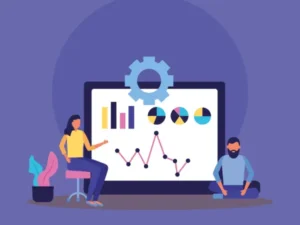
Lead Scoring And Audience Segmentation
Beyond Traditional Demographics
Traditional audience segmentation groups people by age, location, and demography, but predictive AI goes much deeper than that.
Behavioral Clustering and Intent Signals
It combines audience clusters based on their behavioral patterns, engagement signals, and predictive purchase intent.
For example, a mental gym app can use cluster models to group users into:
- Daily meditation for people
- Weekend warriors
- Irregular users
It will send targeted and personalized messages to a specific group of people. Consequently, it will boost the conversion rate.
Real-time Budget Elimination
-
Dynamic Budget Shifting vs. Static Media Plans
One of the most powerful applications of AI predictive analytics in marketing campaigns is dynamic budget shifting as per the response.
It is not logged in the media plan at the start of the campaign, nor is it limited to certain performance signals.
But AI will continuously monitor the results and use the money as required.
-
Multi-Channel Campaign Forecasting
The predictive model does the campaign performance forecasting across various platforms, from display search to social media.
AI has the potential to dynamically shift the budget towards the most effective channel in real time.
Incrementality Testing and Predictive AI
-
Industry Adoption
Incrementality testing is designed to isolate two causal lifts that are already in the mainstream. According to E-Marketer, over 52% of the brands and agencies are using incrementality testing to measure and optimize their campaigns.
-
AI as a Core Pillar for Campaign Prediction
When the question comes, how to use AI for campaign outcome prediction, Incrementality Testing becomes the core pillar for campaigns.
It helps businesses make informed decisions and enhance internal confidence throughout the company.
Why Choose UNV Digital for AI-powered Campaign Intelligence?
At UNV Digital, we have a performance marketer who knows best practices predictive AI to create effectiveness testing ad campaign. Our team of experts has spent more than 10 years building data-driven campaigns for some of India’s top demanding brands.
Whether the businesses need campaign performance forecasting before a major product launch or AI-powered lead scoring to make sales more efficient.
Our team focuses on building a campaign that can predict, adapt, and continuously improve. With the evolving purchasing needs and engagement potential of the customer.
We have the team, credible tools, and the practicality to deliver the specific results. Brands that are winning today are not guessing; they are using the best product practices in predictive AI. Contact us to get a predictive analytics consultation with us!
FAQs
-
What is Predictive AI Analytics in Marketing Campaigns?
AI predictive analytics in a marketing campaign uses historical data, machine learning models, and statistical algorithms for future campaigns. It includes which audience will convert, which creative will perform best, and how much revenue a campaign is likely to generate.
-
How Accurate is AI Campaign Performance Forecasting?
Accuracy will depend on the quality and volume of the historical data fed into the AI model. The industry-level results are compelling, achieved using a forecasting-accuracy-based AI model. It has improved sales efficiency and significantly increased the ROI for a certain business.
-
What are the best practices predictive AI to create effectiveness testing ad campaign?
It all begins with a single, high-impact use case. Lead scoring and churn prediction are among the most accessible entry points for a predictive AI ad campaign. Building clean, first-party data is the priority; then connecting to automated workflows whenever the trigger occurs. The use of incrementality testing alongside predictive models to estimate causal impact will increase ROI.
